San Gimignano
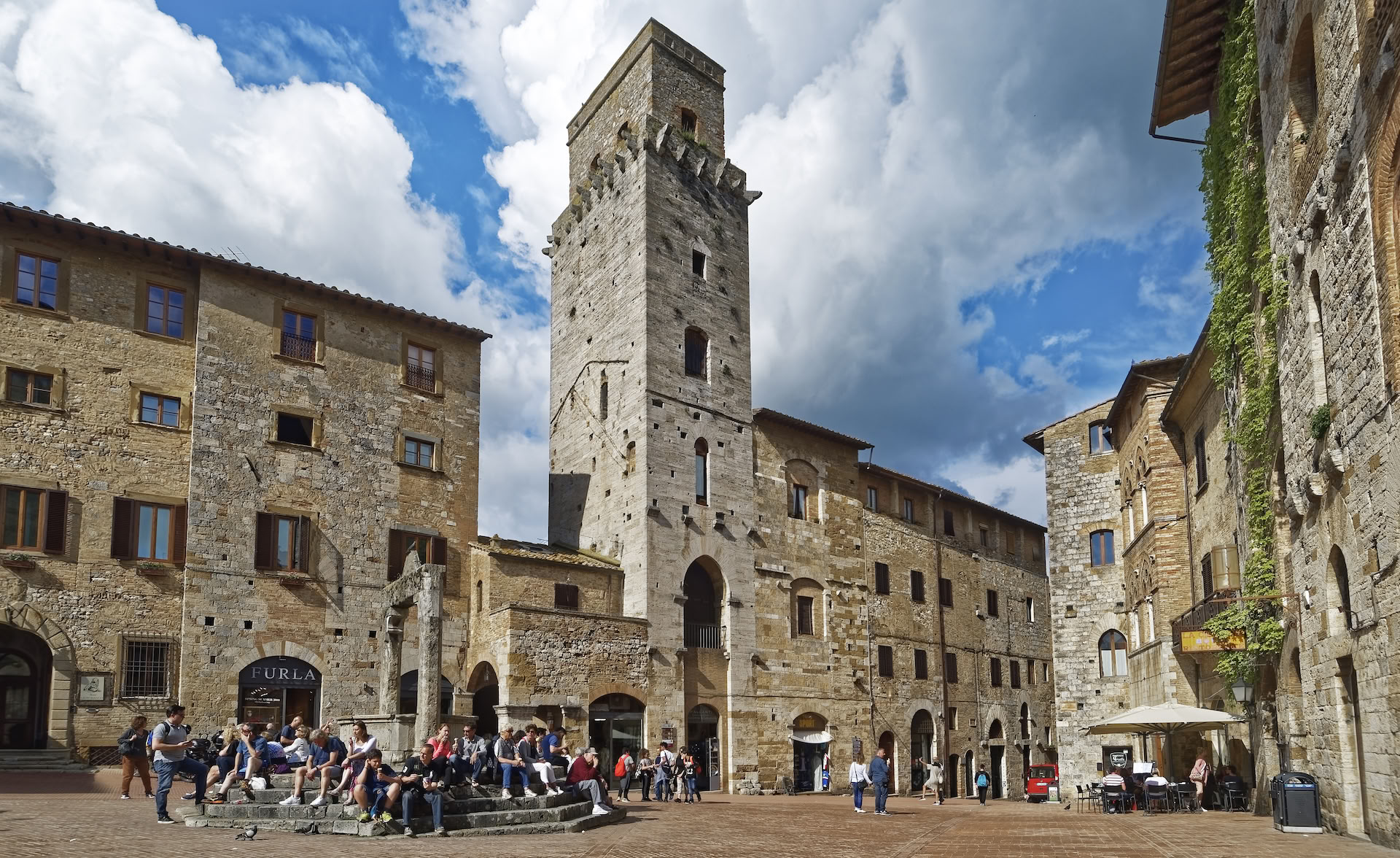
San Gimignano is famous for the silhouette of its towers, on a 334 metres hill dominating the Val d'Elsa. Home to a small Etruscan village in the Hellenistic period (3rd-2nd century BC) it began its history around the 10th century taking the name of the Holy Bishop of Modena: San Gimignano, who allegedly saved the village from the barbarian invasions. It experienced a great development during the Middle Ages thanks to the Via Francigena that crosses the town. This stimulated an extraordinary development of works of art.
In 1199 it became a free municipality, fighting against the Bishops of Volterra and the neighboring municipalities, and suffering internal political divisions between the Ardinghelli (Guelphs) and the Salvucci (Ghibellines). On May 8, 1300, San Gimignano hosted Dante Alighieri, ambassador of the Guelph league in Tuscany. The terrible plague of 134, with the decrease in population that followed, threw San Gimignano into a serious crisis, therefore the town had to submit to Florence. The state of abandonment of the town only finished in recent eras, when the beauty of the city and its cultural importance were again recgnised and highlighted.
apuan alps (38 km)
antro del corchia (28 km)
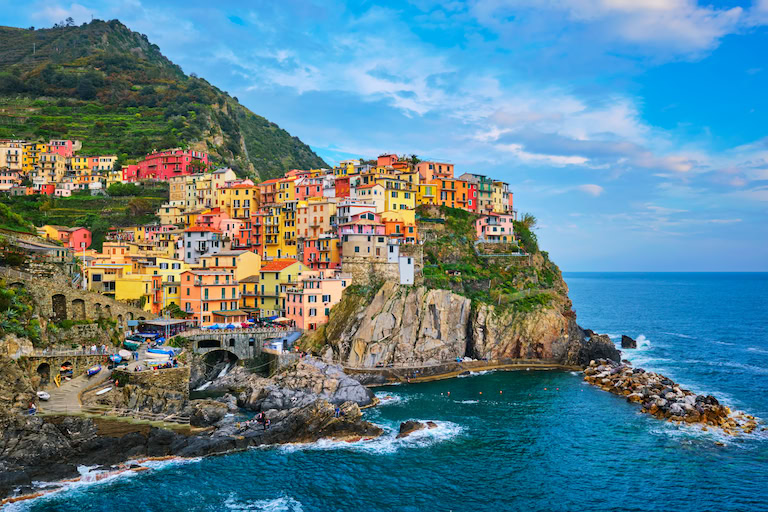
cinque terre (73 km)
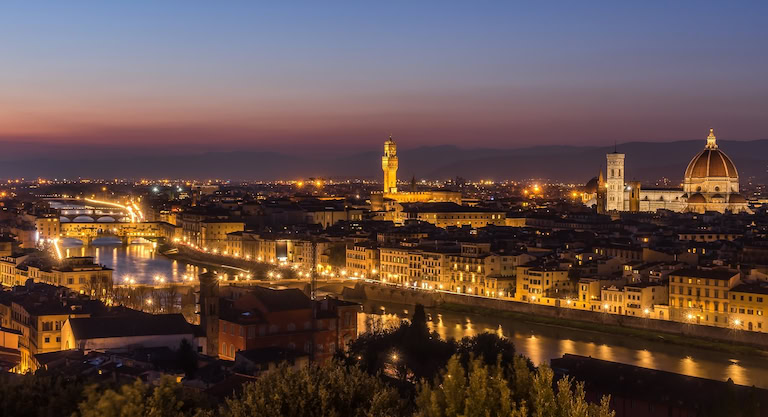
firenze (102 km)
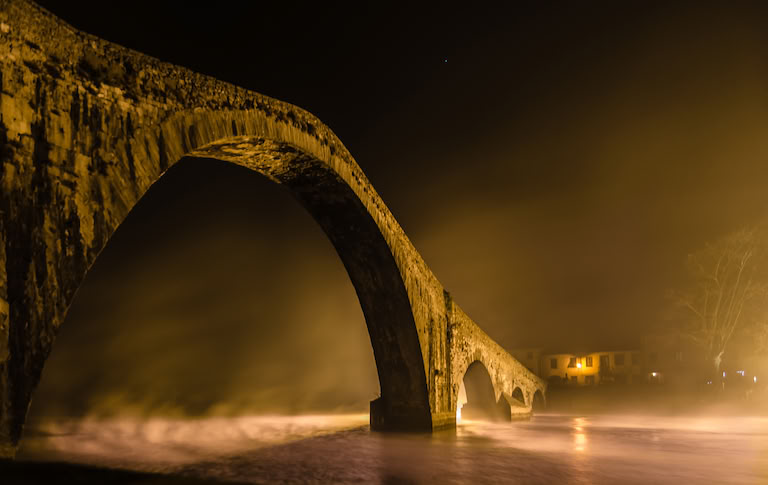
garfagnana (69 km)
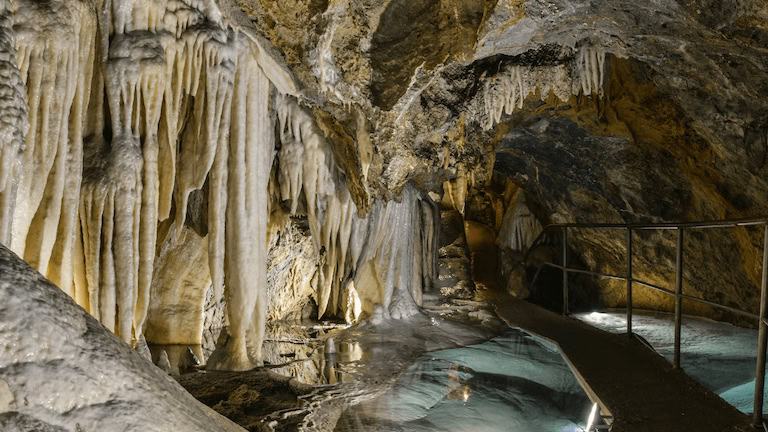
grotta del vento (20 km)
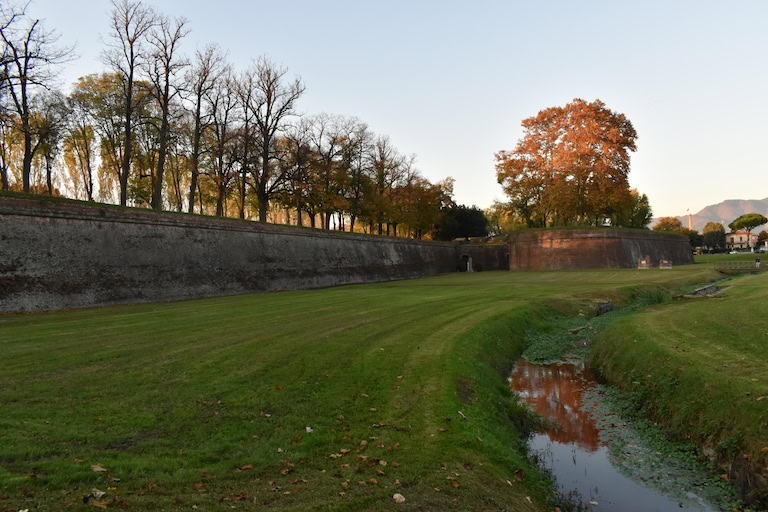
lucca (28 km)
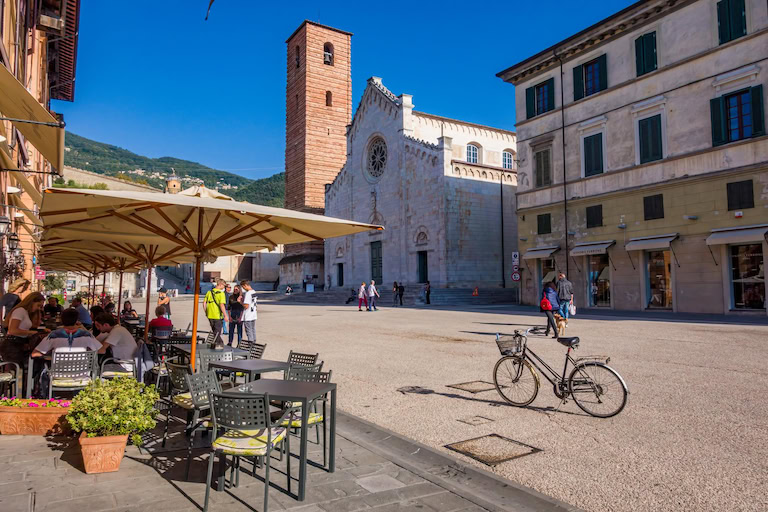
pietrasanta (10 km)
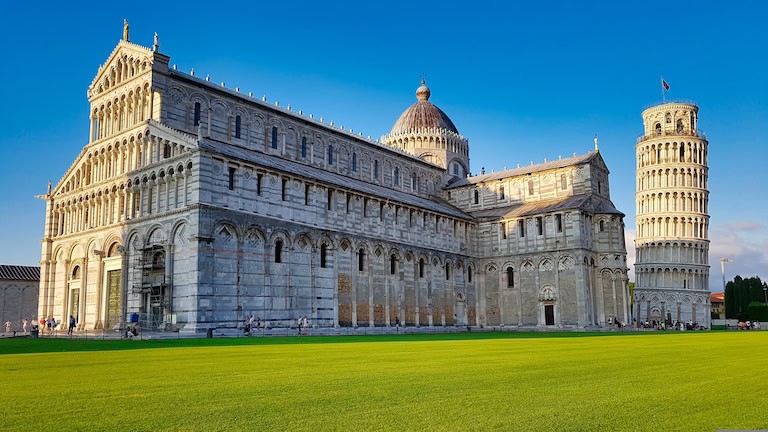
pisa (23 km)
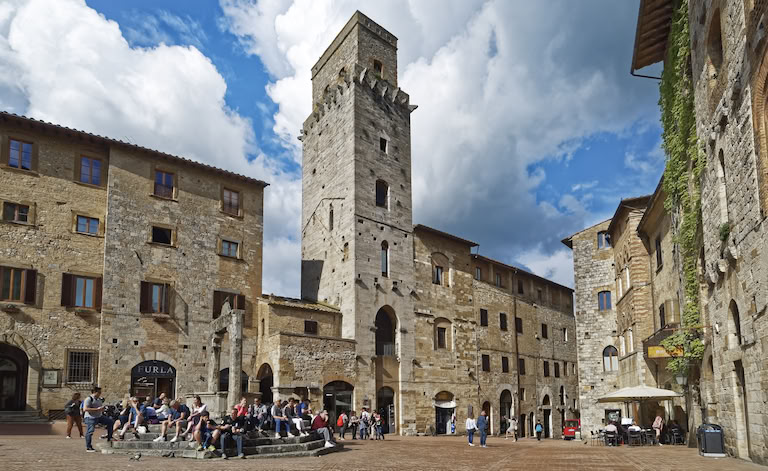
san gimignano (116 km)
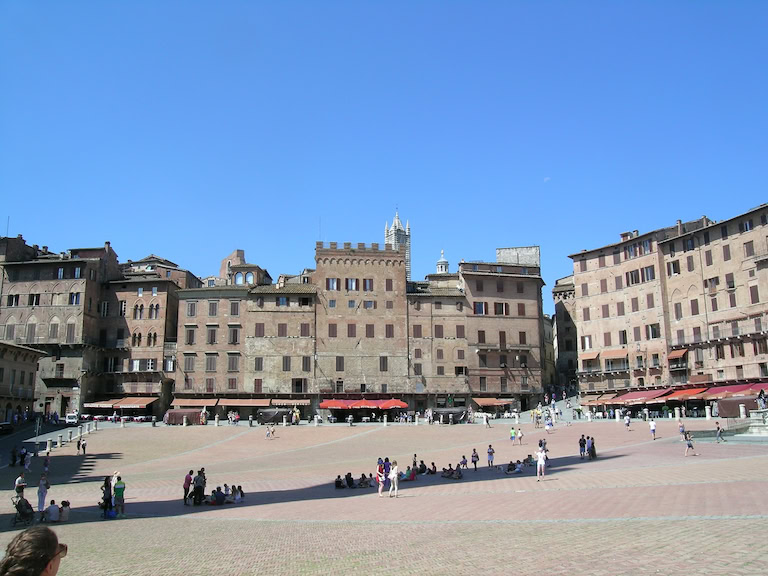
siena (163 km)
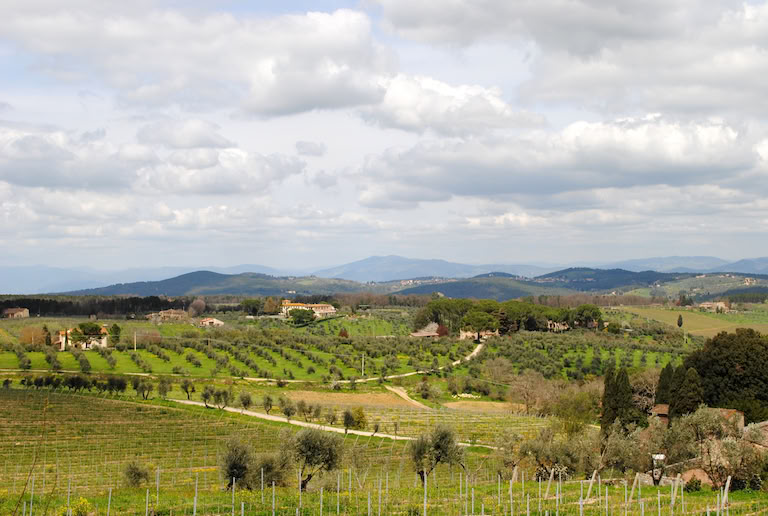
wine routes – chianti (45 km)